Speak without obligation to
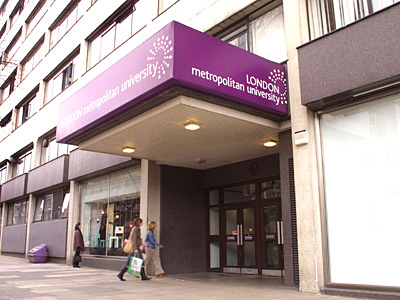
London Metropolitan University
¡Bien! Tu solicitud ha sido enviada correctamente
Would you like to receive information about these related courses?
Just one more thing ...
Some institutions ask us for this data. Please, fill them in
Image gallery
London Metropolitan University

Comments about BSc Mathematical Sciences - At the institution - London - Greater London
Objectives
The course aims to provide a broad mathematical education including statistics and operational research. It is open to students with an interest and aptitude in Mathematics, but who have not studied A-level Mathematics. Case studies and practical examples provide a focus for you to apply the techniques and the skills needed for problem-solving in the real world.
Entry requirements
You should have GCSE English and Mathematics at grade C or above (or equivalent), plus one of the following: at least 120 points from two or more A-levels - at least 120 points from two A-levels including Science or Engineering - a pass in BTEC National Diploma in Science, Engineering or relevant subject area with at least three merits in the final year, excluding common skills.
Academic title
BSc Mathematical Sciences
Course description
Course structure
For Single Honours you take eight modules at each of three levels. Joint Honours involves four modules from each level in Mathematical Sciences, plus four from your other subject. You may also choose a Major/Minor combination after level 1. The course is currently being reviewed. Module titles are likely to cover the following:
Level 1
* Mathematical Techniques I & II
* Discrete Mathematics
* Introduction to Data Analysis
* Linear Algebra
* Introduction to Programming
* Skills and Culture of Mathematics
* Spreadsheets for Decision-Making
Level 2
* Differential Equations
* Financial Mathematics II
* Graphs and Networks
* Further Discrete Mathematics
* Simulation
* Statistical Modelling
* Survey Methods * Data Mining
* Operational Research
Level 3
* Further Mathematical Techniques
* Mathematics Modelling
* Cryptography & Number Theory
* Optimisation
* Forecasting
* Error Correcting Codes
* Advanced OR Techniques